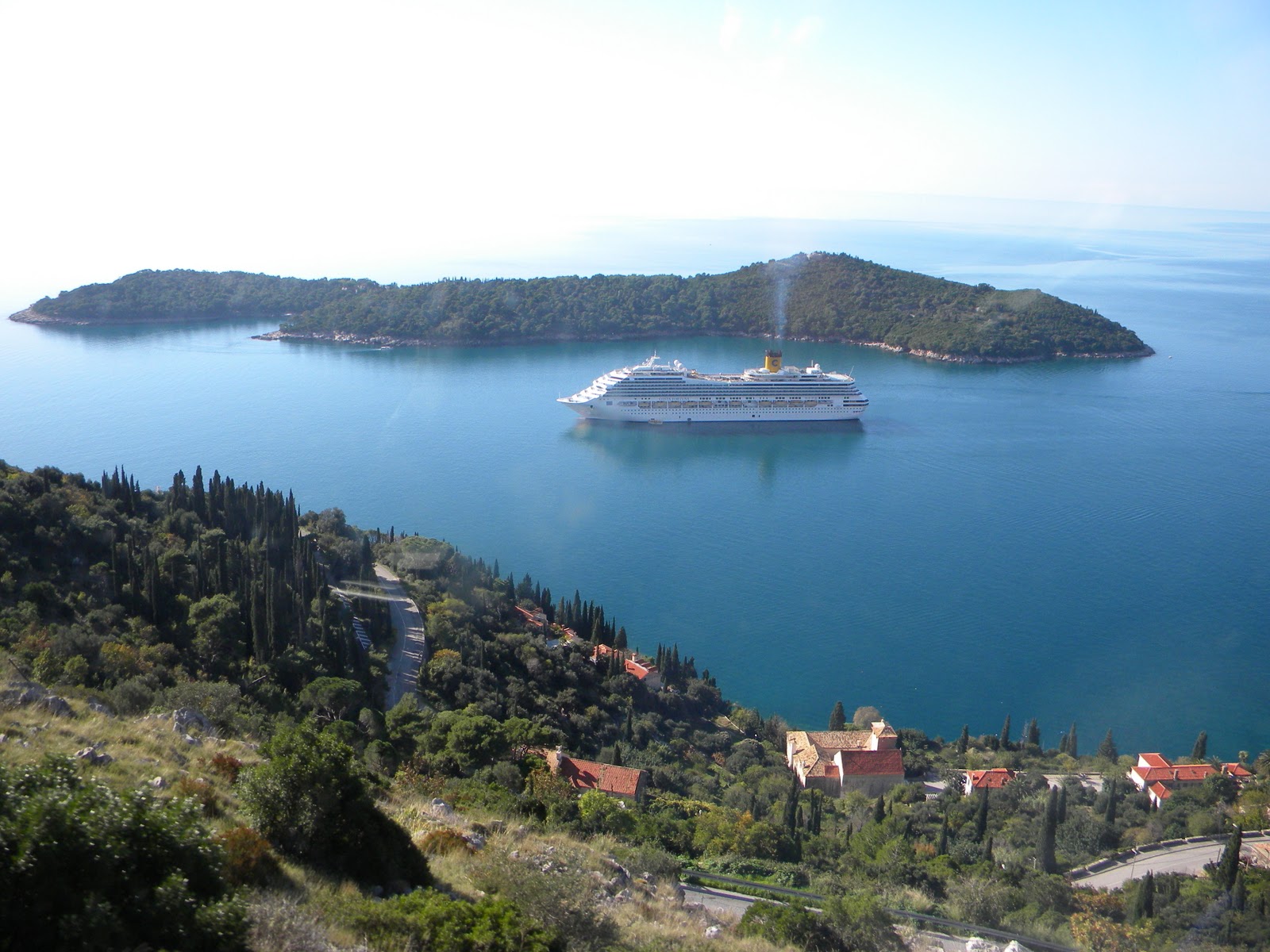
Walk with me as we marvel at how this city and its walls stood the test of time and history.

Entering the city

Saint Vlaho Sculpture

Tourists

The Stradun - main street.

If the walls can speak

The Stradun

Church of Sveti Spaso



Reference:Cavtat perches on the saddle of a wooded peninsula set between two bays, so you're never more than moments from the water. The sea is as still as a mirror, a deep and brilliant blue with pools of green reflected from the pine forests beyond. A wide promenade, fringed with palm trees, runs along the harbour front.
This is the cosmopolitan centre of the town, where fishing and tourist boats jostle with gleaming jet-set yachts the size of battleships. In the same way, simple bars where locals crowd to watch football matches stand alongside restaurants gleaming with silverware and white linen. Ordinary pharmacies and hardware shops are likewise interspersed with hastily improvised souvenir outlets selling cheap shot-glasses and ashtrays sporting the Croatian flag.
If Dubrovnik is a chocolate box, then Cavtat is a paintbox. Cobbled streets with traditional red-roofed brownstone houses climb back from the blue of the waterfront. The narrow stairways between the opposite sides of each street are smothered in clouds of white, mauve and pink blossoms. In the fruit and vegetable market, by the bus station, crates of green and red peppers, purple aubergines and green figs are piled high beside trestle-tables laden with a golden blaze of fruits: bananas, papayas, enormous melons and the gorgeous knobbly lemons that also drip from the surrounding trees like blobs of yellow candlewax.
But most of all, Cavtat is about light. In the daytime, the town shimmers. In the evening, clouds in the night sky are outlined in a glow of copper and silver, looking for all the world like strange new countries on a mysterious old map. It's no wonder that the place has attracted so many artists.