Showing posts with label cruise. Show all posts

Monday, February 21, 2011

Cuties Of Pyrgos

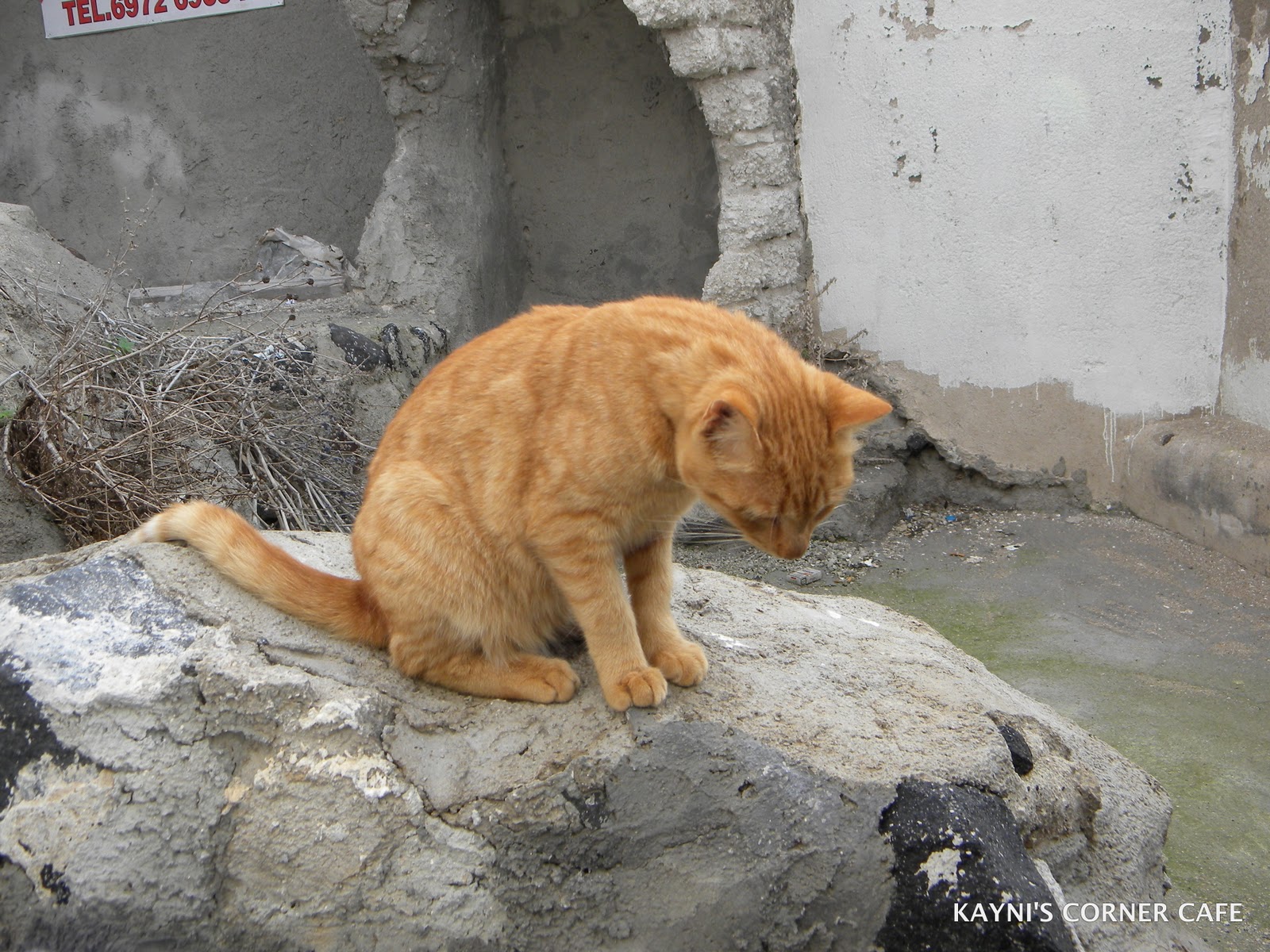
In Pyrgos, I couldn't resist taking photos of these lovely and friendly cats. I hope you'll enjoy them as much as I enjoyed snapping their photos.


"With their qualities of cleanliness, discretion, affection, patience, dignity, and courage, how many of us, I ask you, would be capable of becoming cats?" (Fernand Mery, Her Majesty the Cat)

Sunday, February 20, 2011

The Narrow Walkways Of Pyrgos

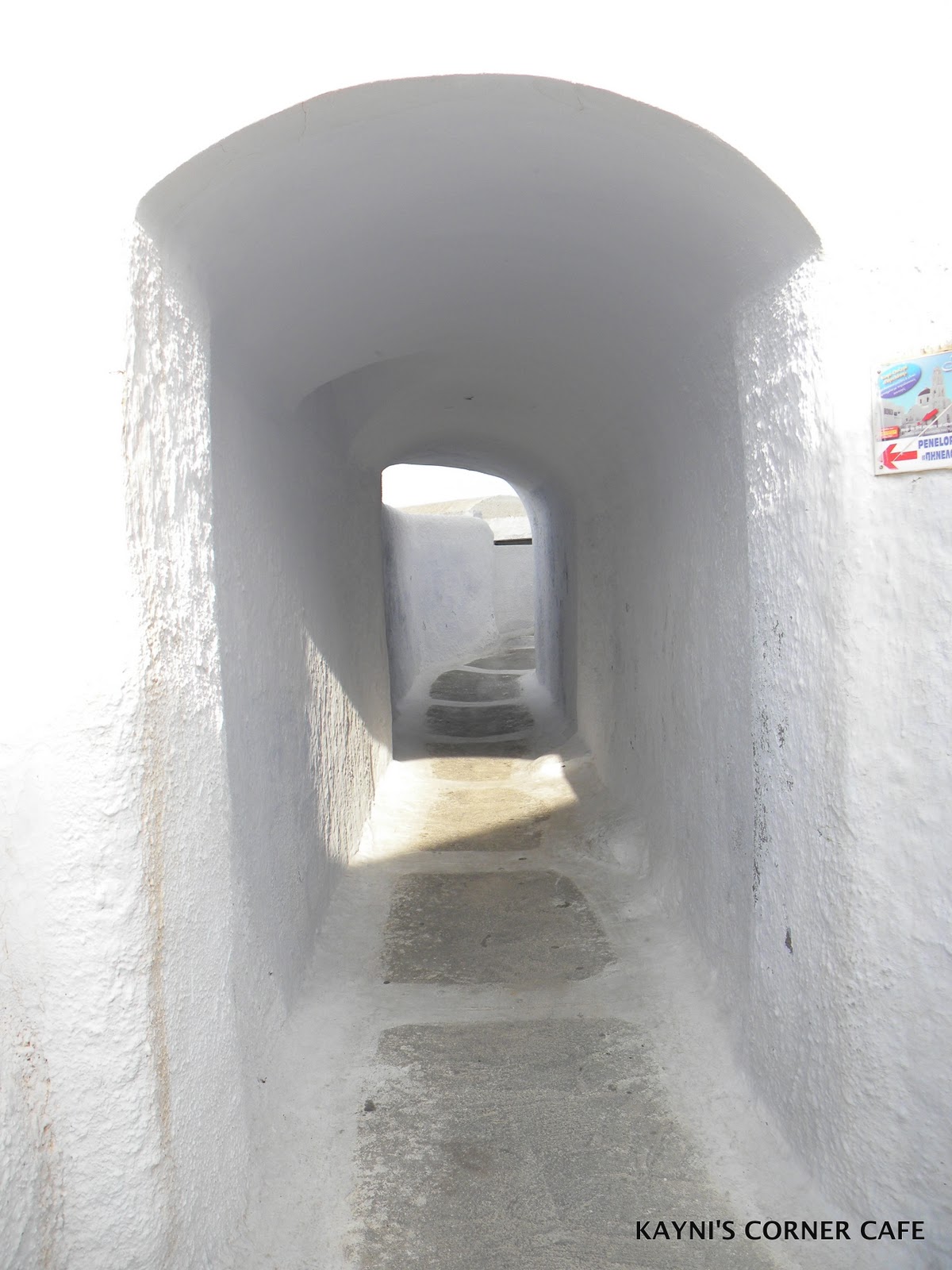
You need good walking shoes and a bit of stamina if you want to explore Pyrgos. Its ascending, narrow, tortuous pedestrian only walkways and traditional old houses make Pyrgos both a photographer's favorite and a nightmare for out-of-shape people like me. Accompanied with heavy breathing and with a sweaty t-shirt clinging on my back, reaching the top of Pyrgos brought me more than relief but also a breath of fresh Mediterranean air, and a spectacular view of the island.

One of the 33 churches in Pyrgos.
White church buildings and the blue painted domes are a familiar sight in Santorini.
Narrow entrances to residential houses.
The walkways get narrower as you near the top.
This orange cat followed us through our tour.
I think I took this photo when we took a break during the climb.
The view gets better as you climb higher.
We weren't allowed to see the inside of this church. I think it was strictly for Greek Orthodox only.
  A view at the top at last!


Purple flowers adorned the walkway walls as we descended back to our bus.
A map of Pyrgos.

Our tour guide explained that the village of Pyrgos was purposely built narrow and dense to thwart pirate attacks. She mentioned that it was easier to defend a village that is densely contained and protected with walls.

Although I strained during the hike to the highest peak of Pyrgos, I really enjoyed meeting some of the locals who were always smiling and friendly. Next time, I'll make sure to be more fit for more strenuous hikes or walks.

Tuesday, January 25, 2011

Part 3: Ephesus - Agora And The Theatre

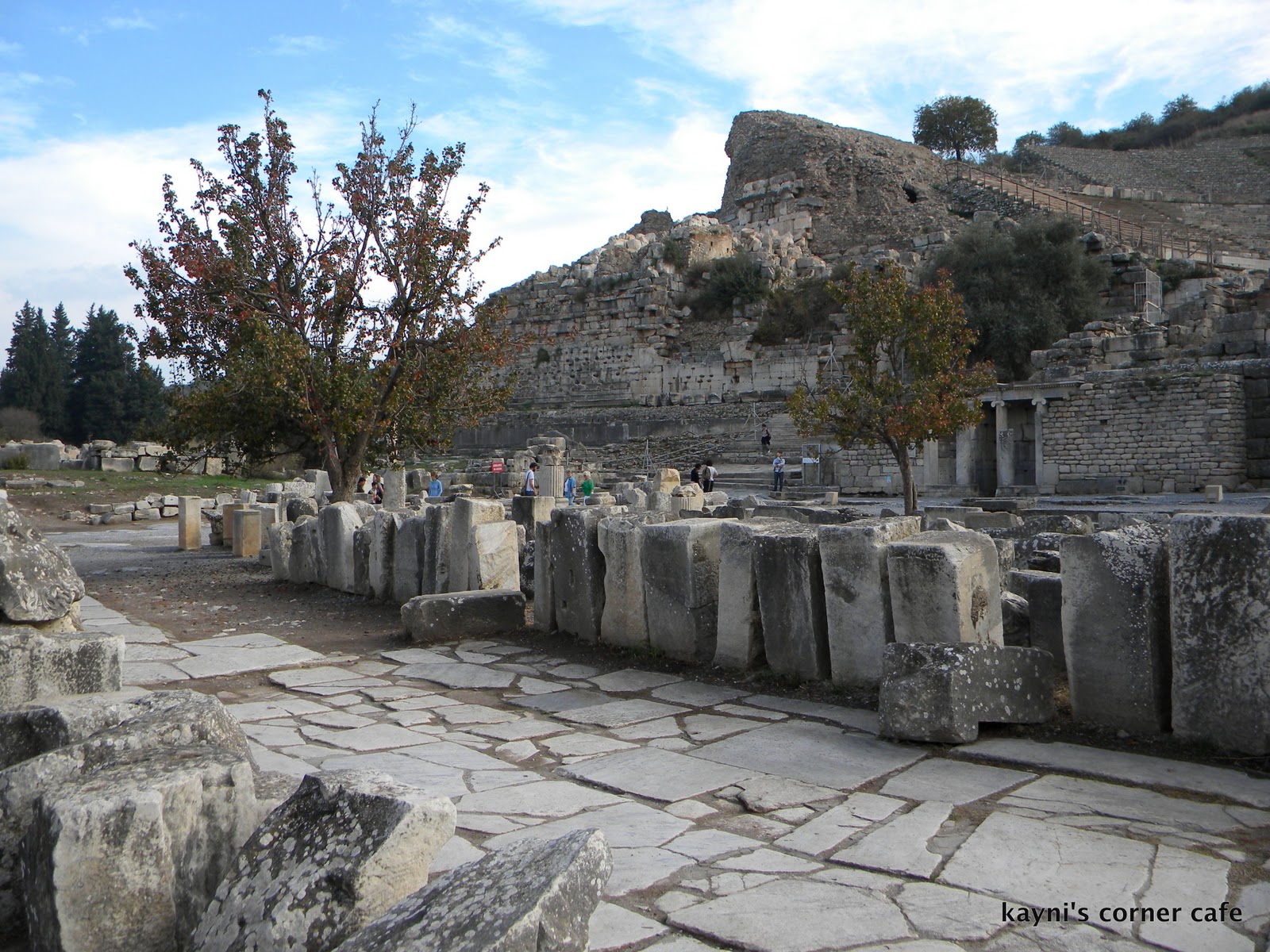
Here's what's left of the agora. Once a bustling commercial area in its prime now lay in ruins with the still and quiet columns standing witness to history and time.
The center for business, politics and trade. I could still imagine how busy and crowded it would have been back then. People doing business, selling, playing board games etc. Now, only the silent columns remain.
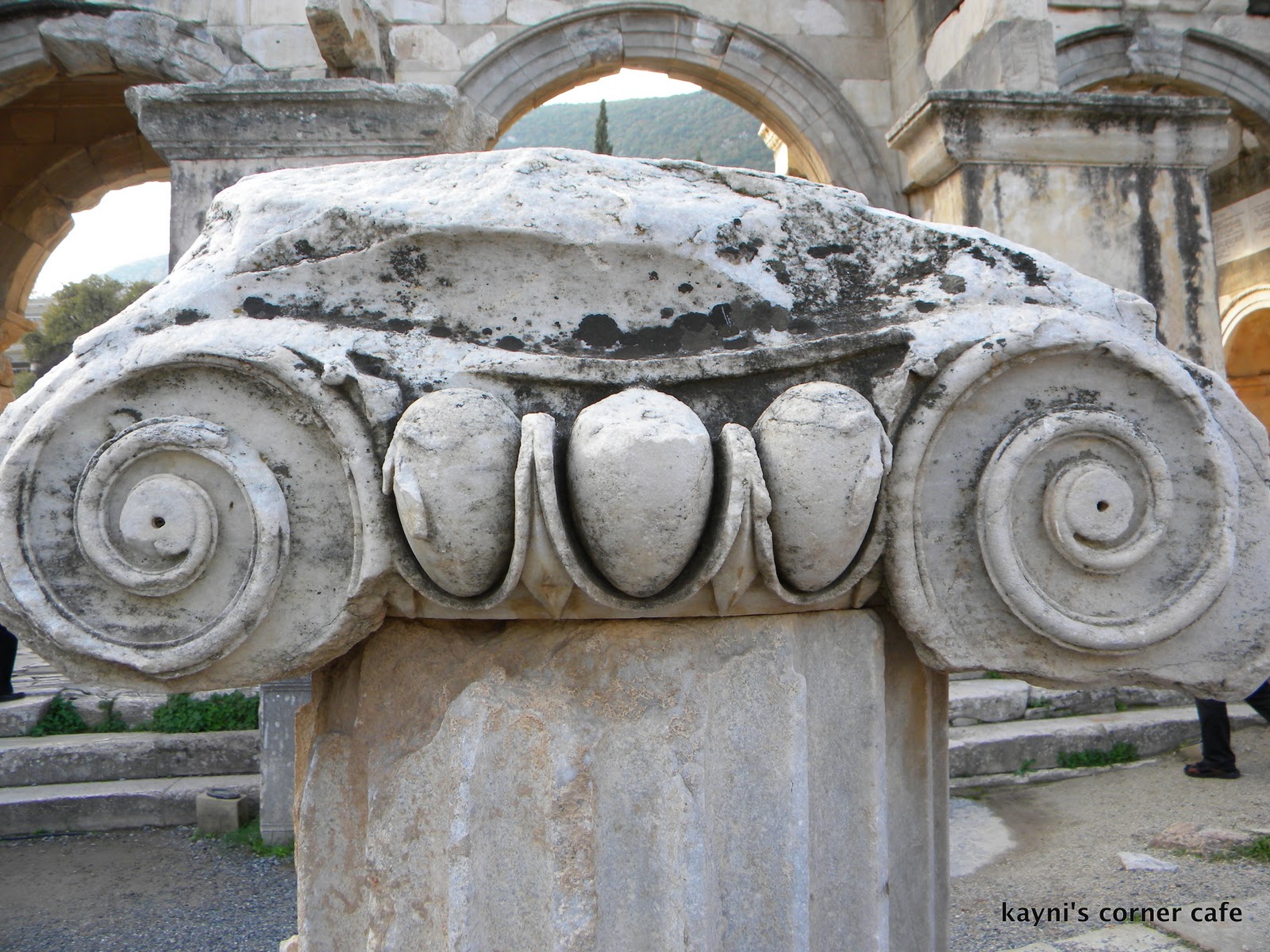
Corinth column.

Part of the main walkway.
The Christian symbol carved on a marble tile. In Greek it is spelled as IXOYE = Iesous Christos, Theou Uios, Soter. Used to identify or acknowledge the presence of Christians.
While exploring the agora, the trumpets blasted and we were treated to a show.
Entrance of Marc Anthony and Cleopatra.
Dancers.
Royalty must be entertained.


I love their footwear.
Gladiator duel.


I waved back.
The Theatre - "this is where St. Paul preached against the pagans." (Source here.)
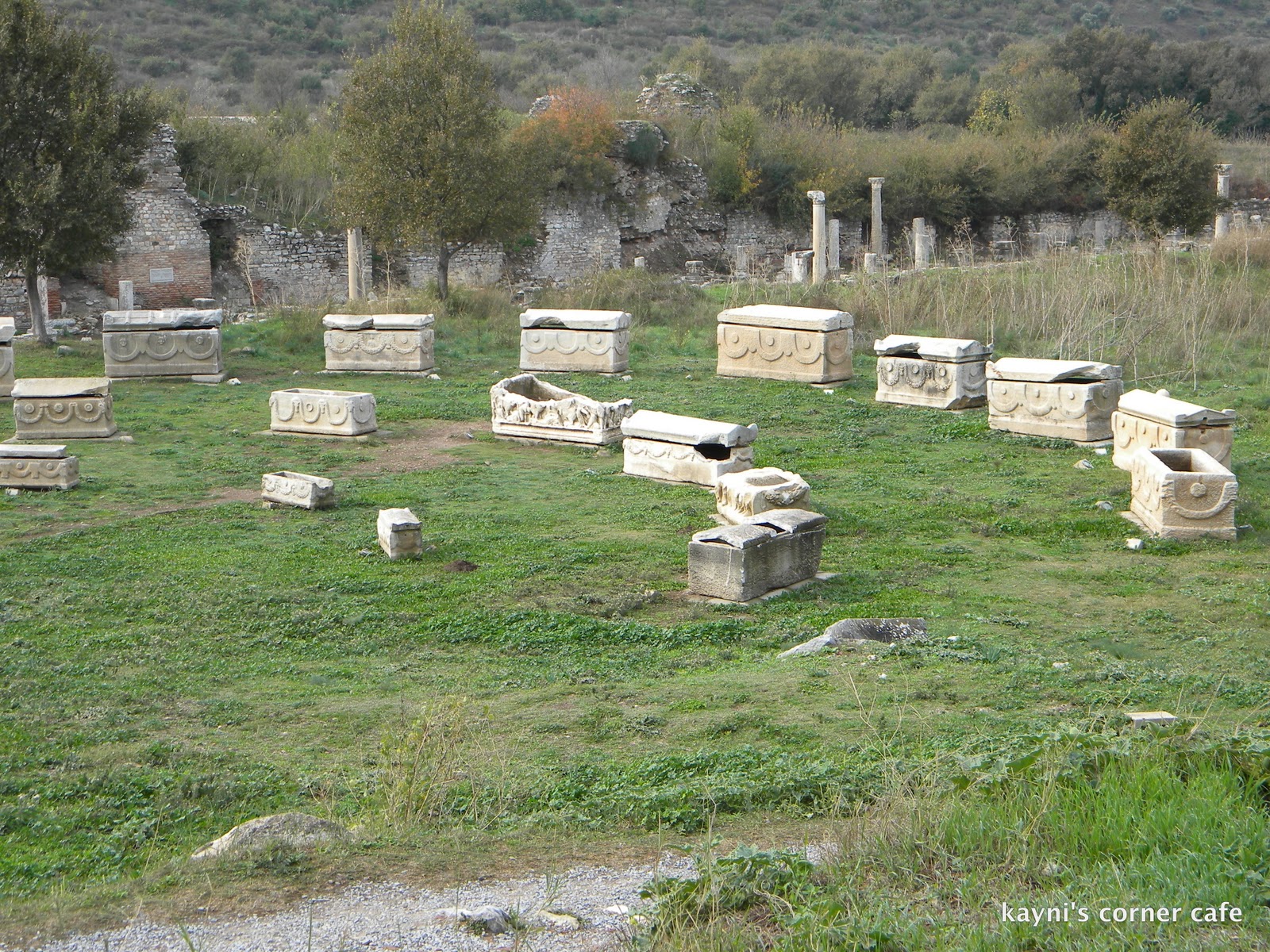
Unearthed sarcophagi.

When I saw these letters, I wondered who carved them on this marble? Who was he? He might be long gone, but his letters are still here - witnessed by many who luckily strolled through Ephesus.

Monday, January 24, 2011

Part 2: The Ephesus Stroll

Walk with me, as we stroll through Ephesus together...

 Greek goddess Nike
 So many visitors on the day we visited.
 Mosaic tile floor
 Doorway to the ancient past.
Public toilets
Library of Celsus, built in 117 A.D.
According to our guide, this was the "third richest library in ancient times after Alexandra and Pergamum."
Designed by the Roman architect Vitruoya, the library was built in memory of Celsus Polemeanus, who was a Roman senator, General Governor of the Province of Asia, and a great lover of books. Celsus' son, Julius Aquila, began the construction in 110 AD. The library was completed by Julius Aquila's successors in 135 AD. Celsus was buried beneath the ground floor in a lead container inside a marble tomb. A corridor behind the north wall leads to the vault.(Source here.)
The interior of the library was burned during a Goth invasion in 262 AD, and in the 10th century, an earthquake brought down the facade. The building we see today was carefully restored by the Austrian Archaeological Institute. (Source here.)
Please join me for our next stroll - the Commercial Agora.